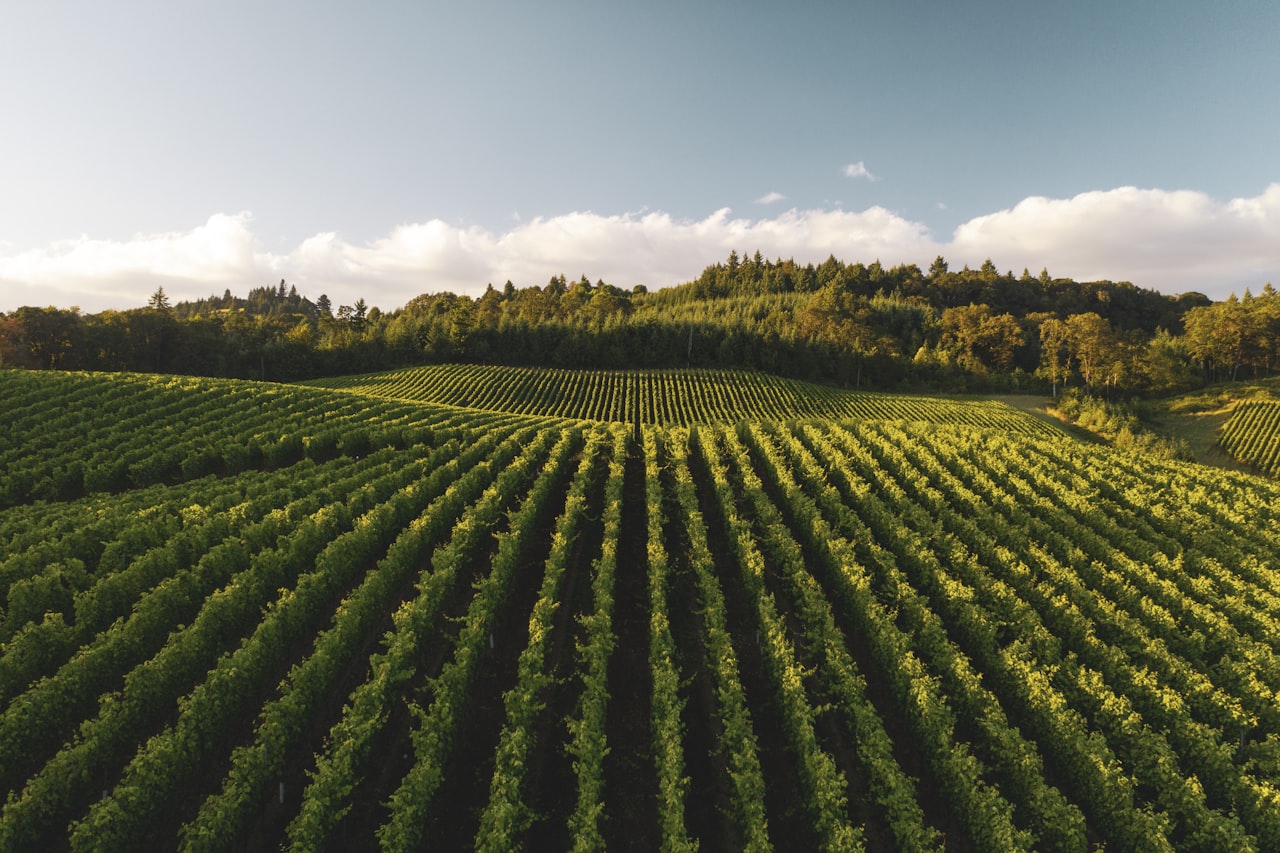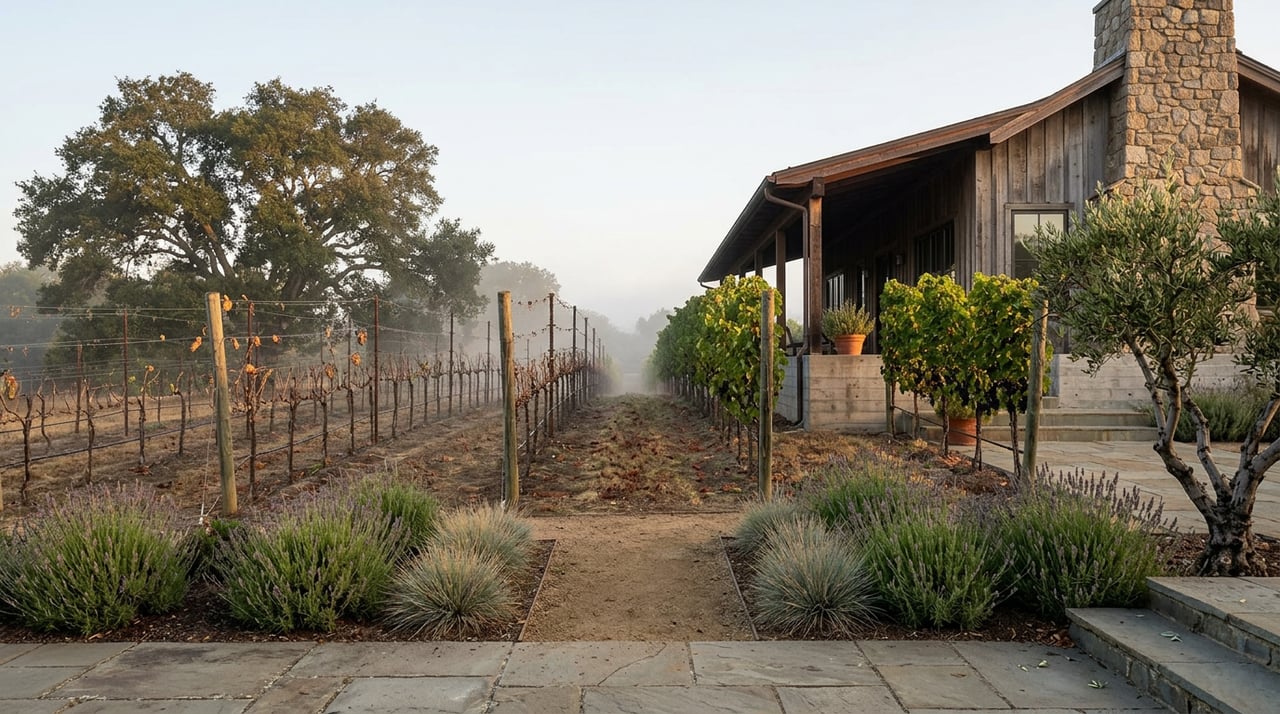
Sparkling wine grapes came off the vine in Santa Barbara County on June 30. That is not a typo and not a rounding error. According to the brokerage firm Ciatti, whose reports track pick dates across California's wine regions, fruit destined for sparkling base was already in the crush pad before the Fourth of July. Most years, that same fruit does not get touched until mid-August, when the Sta. Rita Hills traditionally opens its sparkling harvest. This year it ran roughly six weeks ahead of its usual start, and the valley's calendar has been catching up to that fact ever since.
If you live here, the timing landed in an odd spot. Wine & Fire Weekend, the four-day celebration of Sta. Rita Hills wineries staged by Visit the Santa Ynez Valley, ran August 13 through 16, wrapping up just this past weekend. In a normal season, that weekend happens in the lull before harvest, a stretch when the vines are still ripening quietly and the only traffic on the roads belongs to tasting-room visitors. This year the picking started before the party did. The valley just ran its biggest midsummer wine event and its earliest crush in the same two weeks, in the same stretch of vineyards, and that overlap is worth understanding if you were the one driving through it.
One AVA, Two Kinds of Traffic
Wine & Fire is built around the Sta. Rita Hills specifically, the AVA that sits west of Buellton along Highway 246. That is also the exact geography where the early sparkling picks have been happening. So for those four days, the same corridor was carrying tasting-room shuttles and dinner reservations for the Wine & Fire crowd alongside harvest bins and crush-pad deliveries from vineyards that got an early jump on the season. That is not how the calendar usually works. Most years, the tourism peak and the working harvest are staggered by weeks, sometimes more than a month, so the valley absorbs one kind of traffic at a time. This year they ran concurrently, at least for the earliest-ripening blocks.
It is a small thing, a matter of scheduling rather than crisis, but it is the kind of detail that only shows up if you are paying attention to both calendars at once. The tourism board's calendar tells you when the parties are. The harvest calendar tells you when the actual work happens. This is the first season in a while where those two calendars are colliding rather than taking turns.
Why the Vines Ran Ahead of Schedule
The early start isn't an isolated Santa Barbara quirk. It sits inside a broader pattern along the California coast this year, where growers have reported losses ranging from moderate to severe tied to poor fruit set and shatter, the condition where grape clusters come in sparse or uneven after a rough spring for pollination. A lighter crop on the vine tends to ripen faster, since there is less fruit for the plant to carry to maturity, which helps explain why coastal regions are seeing picks arrive early this year rather than late.
The bigger number sitting behind all of this is the statewide crush. California's 2025 wine grape crush came in at 2.626 million tons, down 8.4 percent from 2.866 million tons the year before, according to figures compiled by the California Department of Food and Agriculture and USDA-NASS. Average grape prices fell about 8 percent over the same period. Silicon Valley Bank's wine industry outlook expects the broader downturn to ease some in 2026, but doesn't expect it to actually bottom out until 2027 or 2028. None of that changes what's happening in the vineyard rows this week, but it explains why a smaller, earlier crop isn't entirely unwelcome news industry-wide. A tighter harvest this year may do some quiet work toward balancing a market that has had more grapes than buyers for a while.
The Valley Won't Ripen All at Once
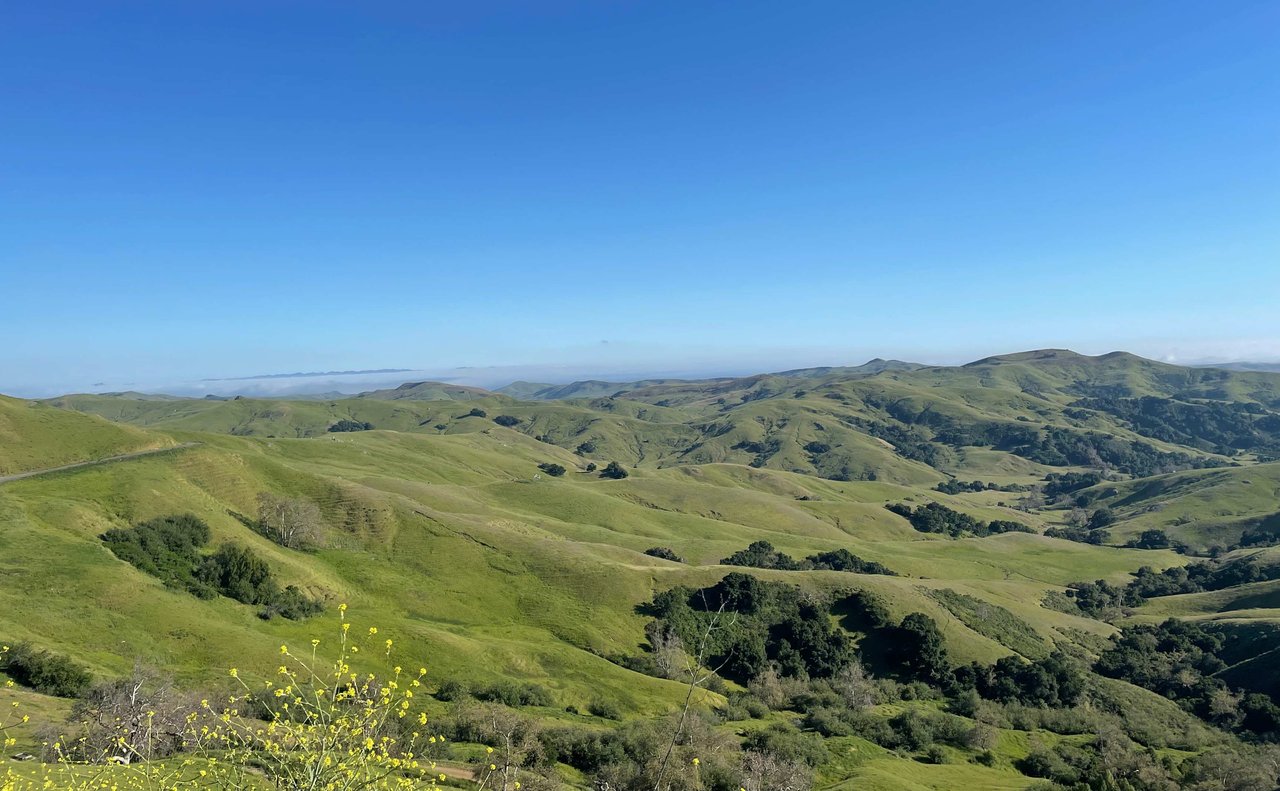
What this means practically, for anyone who lives along the valley's back roads, is that the harvest is going to move through the AVAs in stages rather than arrive all at once. The rough order, based on how Central Coast harvest timing typically unfolds:
- Sta. Rita Hills, sparkling base: already underway, picked as early as June 30 this year against a typical mid-August start
- Sta. Rita Hills and Santa Maria Valley, Pinot Noir and Chardonnay: the region's signature varieties, usually coming in through early to mid-September
- Ballard Canyon and Happy Canyon, Bordeaux and Rhône varieties: the warmer inland AVAs pick later, typically through late September and into October
If your daily drive takes you west toward Lompoc or out along 246, you are already seeing crush activity. If your routine runs east toward Ballard Canyon or up into Happy Canyon, the trucks and bins are still weeks out. Both halves of the valley are on the same harvest, just not on the same week.
What's Actually on the Calendar Through October
The next fixed date worth knowing is Taste of the Santa Ynez Valley, running October 1 through 4 this year and presented in partnership with Sunset. It spans all six valley communities, Ballard, Buellton, Los Alamos, Los Olivos, Santa Ynez, and Solvang, opening in Los Alamos with a wine reception and communal dinner and closing in Solvang with a grand tasting. New for 2026 is the Heritage Farmland & Flavors of SYV Tour on October 2, a hands-on look at the valley's working farms through visits, tastings, and a picnic, which is a fitting addition given how much attention this year's growing season has already drawn to what's actually happening on the land rather than just in the tasting room. Tickets run $35 to $200 and need to be bought in advance.
Beyond that, October brings the string of grape-stomp and harvest celebrations that punctuate the valley every fall, including Vincent Vineyards' Harvest Celebration on October 11, with a patio lunch, an old-fashioned grape stomp, and a chance to hear directly from winemaker Zach Perron about the vintage. Given how early this year's picking started, don't be surprised if some of these October events end up celebrating a harvest that wrapped earlier than the invitations suggest. A compressed season tends to finish compressed too.
A Season Worth Watching Closely
None of this changes the valley's rhythm in any dramatic way. Wine country still smells like wine country in August, the tasting rooms are still busy, and the hills are still doing what they do every summer. But the overlap this year between a tourism weekend built around the Sta. Rita Hills and a harvest that started weeks ahead of that same AVA is not something the calendar usually produces. It's a reminder that the valley runs on two clocks at once, one set by visitor demand and one set by what the vines actually need, and this was the week those two clocks briefly landed on the same page.
If you've lived here through a few harvests, you already have a sense for how the valley usually paces itself in the back half of the year. This one is worth watching a little more closely than most, if only because it started before anyone expected it to.
For those who know this land in a different capacity, whether it's a family vineyard parcel, a ranch property along one of these same AVAs, or a home where the harvest calendar has real bearing on daily life, the Eric Haskell Group brings four generations of Santa Barbara County knowledge to conversations about what a property like that is actually worth. Request a Bespoke Valuation when the time is right.