Friday morning, a little before eight, a dozen folding tables go up along the 1100 and 1200 blocks of Coast Village Road. Buckets of ranunculus and stock lean against a flower vendor's tailgate. A citrus grower unloads crates that were on the tree the day before. By eleven-fifteen it will all be gone, packed back into trucks, the sidewalk swept clean until next Friday, exactly as it has been for decades. Fifty yards away sits a building that has already worn three different restaurant names in recent years, and opened this summer under a fourth.
That contrast is the story of Coast Village Road right now, and it is easy to miss if you only pay attention to the part everyone is talking about.
Twelve Stalls, by Design, Not by Decline
The Montecito Certified Farmers' Market runs Fridays from 8 a.m. to 11:15 a.m., and it is, by design, the smallest of the six weekly markets operated by the Santa Barbara Certified Farmers Market Association, a nonprofit that has organized producer-to-consumer sales in the county since 1983. On a given Friday, roughly 12 to 15 certified agricultural vendors set up along a rotation that cycles through four sections of the same two blocks. Compare that to the association's flagship Saturday market on State and Carrillo downtown, where shoppers can find as many as 90 vendors on a good week. Montecito's Friday market isn't a smaller version of that market trying to grow. It's a different kind of market entirely, sized to a neighborhood that has never needed to draw a crowd from outside it.
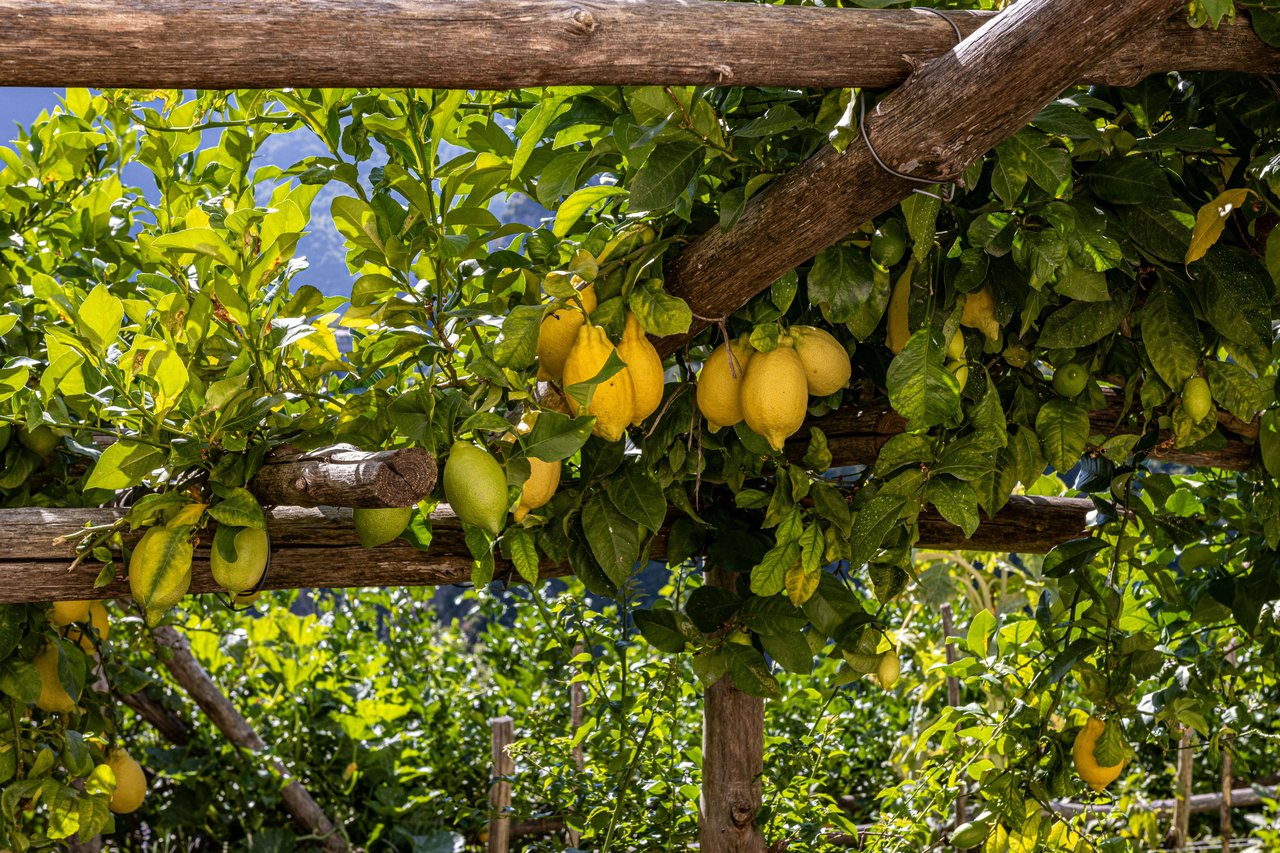
One detail that separates it from every other stop on the association's calendar: it carries a noticeably higher concentration of flower vendors than the Carpinteria, Solvang, Goleta, or downtown markets. That is not a marketing angle. It is a function of what this particular strip of Montecito has always wanted from a Friday morning: something to bring home for the table, not something to build a day trip around.
The market has not needed to reinvent itself, expand its footprint, or chase a bigger crowd, because its job has never been to be a destination. It is infrastructure. Residents plan their Fridays around it the same way they plan around trash pickup or the mail. That kind of quiet reliability is worth naming, because it is rare on this particular street this year.
A Hundred Feet Away, the Address Keeps Changing
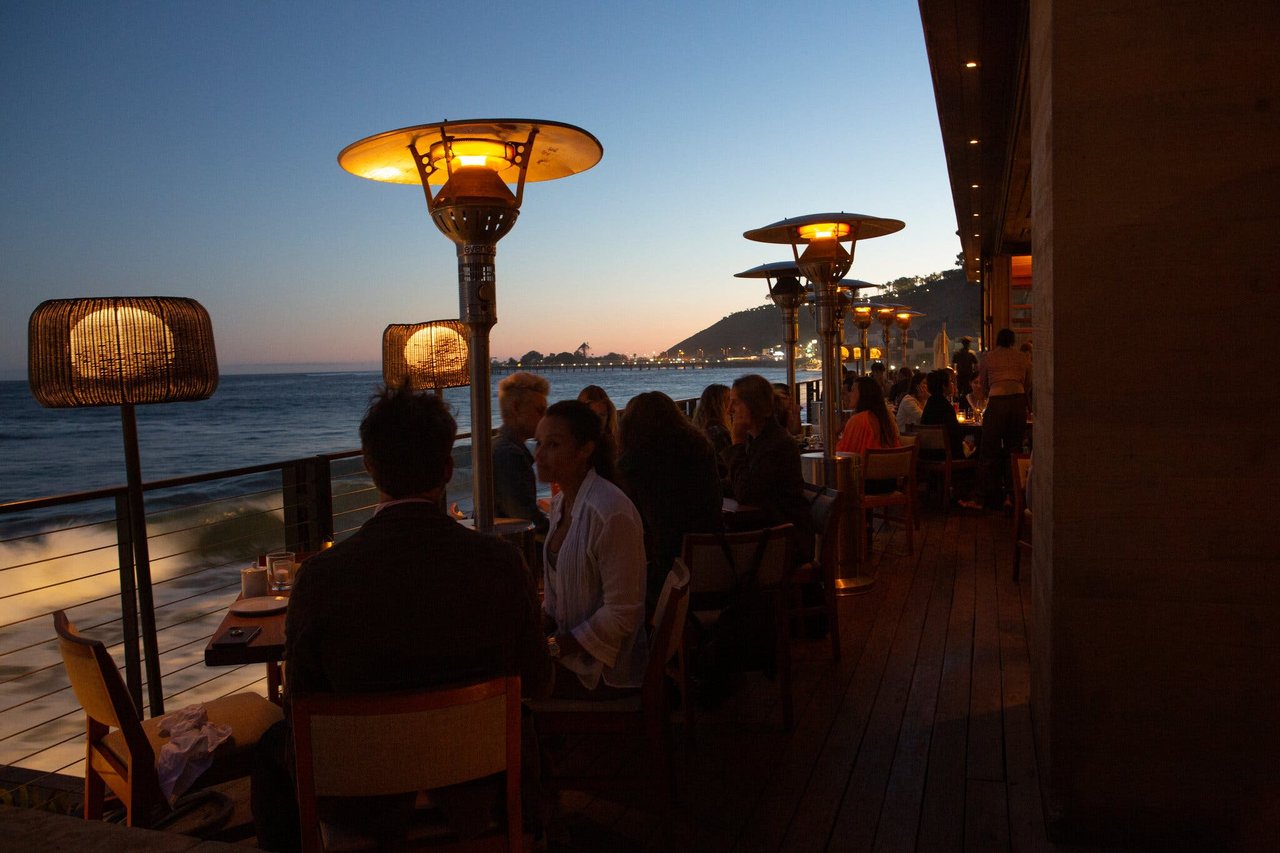
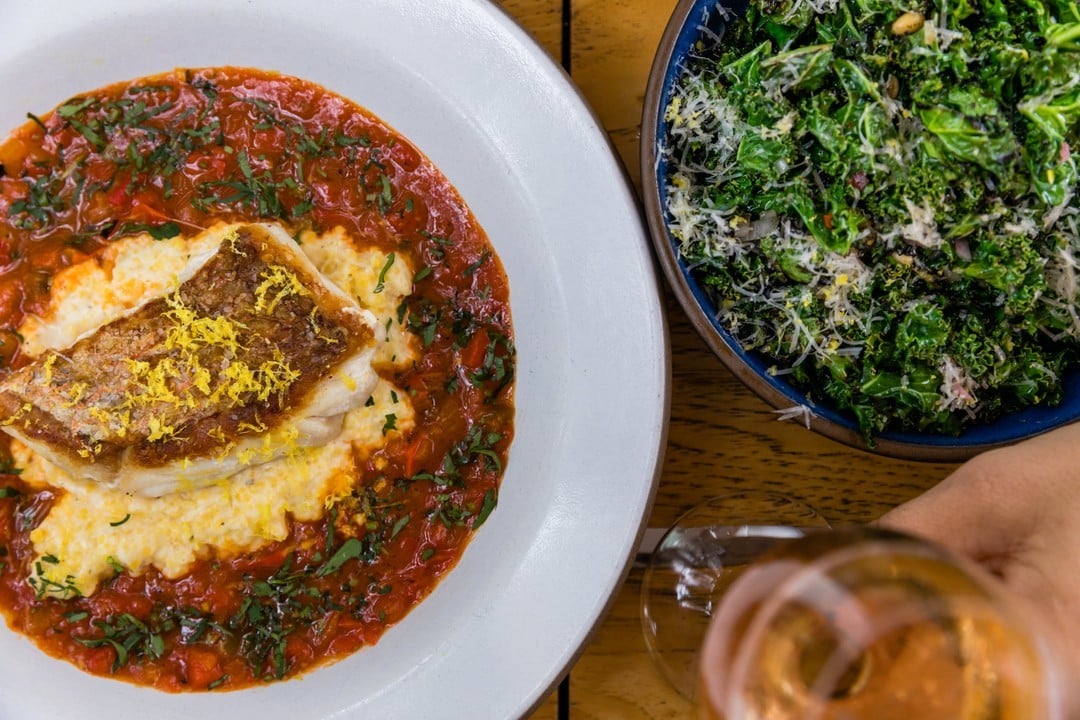
Walk two minutes from the market's flower stand and you reach 1198 Coast Village Road, where a restaurant called Monte's opened this year. It marks the first California project from Endwell Hospitality, a New York group whose local restaurants source produce from Rincon Hill Farm, a regenerative operation in nearby Carpinteria. The building itself has a memory problem: it has been Bar Lou, then Oliver's, then Peabody's, and now Monte's, three concept changes at one address inside a period most residents would describe as recent.
Up the road, in Montecito's Upper Village, the same pattern is playing out with an even longer memory attached to it. Via Vai Trattoria and Pizzeria ran at 1483 East Valley Road for 30 years before closing in April 2024. This August, the space reopened as Ancora Osteria, an Italian restaurant from chef Luca Crestanelli, his brother Francesco, and longtime Upper Village figure Norman Borgatello. Thirty years is a long tenure for any single concept to hold one address. The new tenant's name was already circulating locally by November 2024, which means the lease itself took nearly two years to move from rumor to an open dining room this August.
None of this is unusual for a commercial strip working through a normal cycle of restaurant turnover. What's unusual is how compressed the timeline has become, and how visible that compression is against a farmers market sitting a few doors down that has not needed to change anything about itself in the same window.
Two Different Businesses, Two Different Bets
The mechanism here is simple once you see it. The farmers market is a nonprofit cooperative built on a producer-to-consumer model. Its vendors don't compete with each other for the same customer's dollar in the way restaurants do. A citrus grower and a flower vendor aren't rivals. There's no need to renovate, rebrand, or chase a design trend, because the product sells itself on freshness and the relationship is direct. The market's overhead is a folding table and a permit.
A restaurant on Coast Village Road is making a different kind of bet. It is competing for a finite number of dinner reservations against every other restaurant within a short drive, in a neighborhood where diners have genuine alternatives in Santa Barbara's downtown corridor and along the Carpinteria coast. When Endwell Hospitality picked 1198 Coast Village Road for its first California outpost, it was betting that farm-to-table sourcing and a fresh concept could succeed where three previous tenants couldn't hold the space. When the Crestanelli brothers and Norman Borgatello took on the Via Vai lease, they were betting that Upper Village permitting delays and a well-known local landlord relationship would get them open faster than a newcomer could manage, and that a Santa Ynez following built over a decade at S.Y. Kitchen would follow them down the grade.
That is a fundamentally more exposed position than selling ranunculus out of a truck bed. It is also why the restaurant side of this street will keep changing hands at a pace the market side never will.
What a Friday Actually Looks Like
For a resident, the practical upshot is worth knowing even if you've walked this stretch for years. The market's four-section rotation means the vendors closest to where you park can vary week to week within the same two blocks, so a specific stall you're chasing is worth confirming rather than assuming. Because the vendor count stays in that 12-to-15 range, the good produce and the flower selection tend to move fast in the market's first hour, well before the 11:15 close.
The evening side of the street, meanwhile, is worth checking before you assume anything has stayed the same since your last visit. A building that housed a familiar name last spring may carry a different one by fall. That is not a criticism of the businesses involved. It's simply the current state of a corridor where the daytime rhythm has held steady since before most of today's residents moved in, and the evening rhythm is being rewritten in real time by operators betting on a market that keeps drawing outside interest, including from hospitality groups a continent away.
What this adds up to is a version of Coast Village Road that runs on two separate clocks. One of them was set decades ago by a nonprofit association and hasn't needed resetting. The other gets adjusted every time a lease turns over, which on this particular block has been more often than not.
The Part Worth Watching
None of this is a signal about property values or timing, and it shouldn't be read as one. It is simply what daily life on this street actually looks like right now, for anyone who already calls Montecito home and has wondered why the same four blocks can feel both entirely familiar and constantly in flux depending on what hour you're standing in them.
If there's a pattern worth watching, it's this: the addresses that keep changing hands are the ones chasing an evening crowd that has options elsewhere. The one that hasn't changed in decades never tried to compete for that crowd in the first place. On a street this small, that distinction tends to explain more than it first appears to.
Montecito's rhythms, from a Friday morning market to a lease that's changed hands three times, are the kind of detail that only becomes visible to someone who watches this coastline closely over years, not months. If you're weighing a move within Montecito or considering what a property on a street like this is actually worth in today's market, the Eric Haskell Group has spent four generations paying attention to exactly these details. Request a Bespoke Valuation to start the conversation.